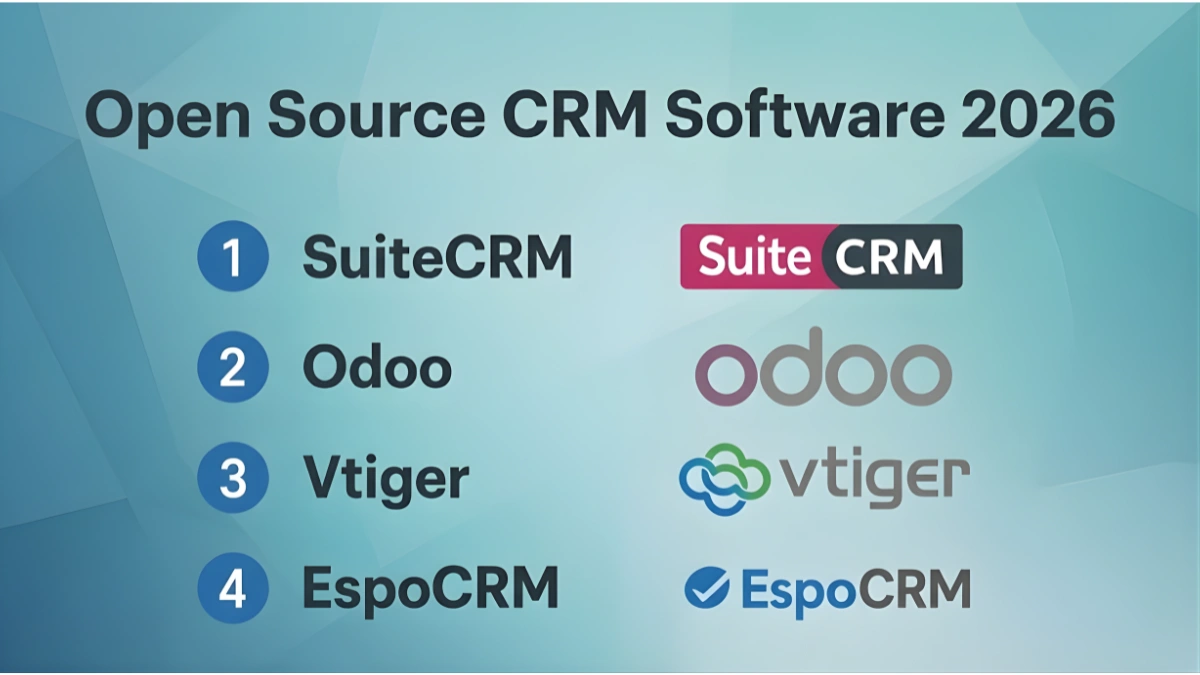
Open-source CRM software continues gaining attention among businesses, startups, and technical teams because it offers a rare combination of cost control, customization freedom, and long-term software ownership. Unlike proprietary CRM systems that often lock businesses into fixed pricing and limited flexibility, open-source CRM platforms allow organizations to shape workflows, integrations, and user experiences according to actual business needs.
In high-value software markets, open-source CRM topics attract strong advertiser demand because companies increasingly compare total software cost, hosting control, compliance readiness, and long-term scalability before selecting customer management systems. Businesses that choose open-source CRM correctly often gain lower licensing pressure while keeping stronger control over data and internal processes.
Why Open Source CRM Is Becoming a Strong Business Choice
Many businesses are moving toward open-source CRM because software flexibility matters more as operations grow.
Main advantages include:
- Lower long-term software cost
- Workflow customization freedom
- Self-hosted deployment options
- Strong developer control
- Easier custom integrations
This makes open-source CRM attractive for businesses with technical capability.
Core Features Businesses Should Expect
A strong open-source CRM should still provide modern business essentials.
Important features include:
- Lead and contact tracking
- Pipeline management
- Reporting dashboards
- Workflow automation
- Role-based permissions
These features determine daily usability.
Best Open Source CRM Platforms in 2026
| CRM Software | Platform | Key Features | Community Strength |
|---|---|---|---|
| SuiteCRM | Web-based | Custom modules, reporting, automation | Strong global community |
| Odoo CRM | Web & Mobile | Sales pipeline, invoicing, ERP connection | Large developer ecosystem |
| EspoCRM | Web-based | Lead tracking, API support, dashboards | Growing support network |
| YetiForce | Web-based | Security controls, workflow automation | Active open-source community |
Why SuiteCRM Remains Highly Preferred
SuiteCRM remains widely chosen because it offers broad customization without forcing businesses into paid enterprise licensing.
Strong reasons businesses choose it:
- Flexible modules
- Large support community
- Stable business usage
This suits many mid-size organizations.
Odoo CRM for Broader Business Integration
Odoo attracts businesses that want CRM connected directly with finance, inventory, and operations.
Major strengths include:
- ERP integration
- Modular expansion
- Broad business coverage
This makes it highly practical for growing businesses.
EspoCRM for Lightweight Custom Deployment
EspoCRM remains attractive where businesses want clean CRM functionality without heavy complexity.
It performs well because:
- Setup remains simple
- API flexibility is strong
- Reporting stays practical
Why Hosting Strategy Matters
Open-source CRM often requires choosing between self-hosting and managed deployment.
Self-hosting gives:
- Full control
- Stronger privacy management
- Internal customization freedom
Cloud hosting reduces technical maintenance.
Security and Compliance Considerations
Open-source CRM can be highly secure when configured correctly.
Important controls include:
- Role permissions
- Encryption layers
- Backup policies
This becomes critical in regulated industries.
ROI Advantages in Cost-Sensitive Businesses
Many businesses choose open-source CRM because licensing savings become significant over time.
Long-term gains often include:
- Lower subscription cost
- Reduced vendor dependency
- Stronger software ownership
This improves total software value.
FAQs
1. Which open-source CRM is easiest for business use?
SuiteCRM is often widely adopted.
2. Is Odoo good for CRM only?
Yes, but it also supports wider business tools.
3. Do open-source CRMs require coding?
Basic use does not, deeper customization often does.
4. Is open-source CRM secure enough?
Yes, with proper setup.
5. Can open-source CRM scale well?
Yes, many businesses scale successfully.
Conclusion: Open-source CRM software remains highly attractive because it gives businesses stronger control over cost, customization, and long-term software direction. Organizations that choose the right platform and manage deployment carefully often achieve strong ROI without expensive software lock-in.
Disclaimer: This article is for informational purposes only. Open-source CRM features, support options, and deployment requirements may vary depending on software version and provider ecosystem. Businesses should verify technical needs before implementation.