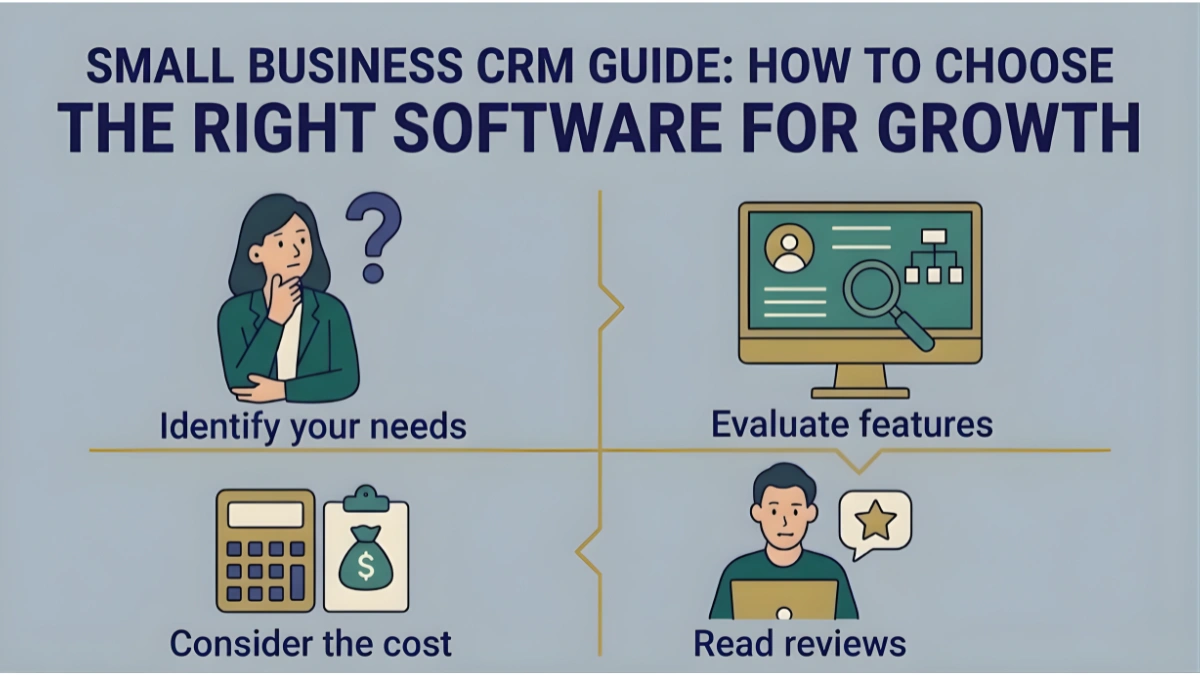
Choosing CRM software for a small business is no longer only about storing customer contacts. Today, the right CRM directly influences lead conversion, customer retention, sales tracking, and long-term business growth. Small businesses often operate with limited staff and tighter budgets, so selecting software that improves efficiency without creating complexity is critical.
CRM-related business software also attracts strong advertiser demand because buyers actively compare features, pricing, automation tools, and integrations before purchasing. The detailed reference you shared strongly shows that affordability, scalability, and integration with marketing systems now drive most small-business CRM decisions
Why Small Businesses Need CRM Software
A CRM helps small teams manage customer relationships more efficiently.
Main benefits include:
- Centralized customer data
- Better follow-up tracking
- Sales visibility
- Automation of repetitive tasks
- Improved lead handling
This helps small businesses grow faster.
Top CRM Platforms Small Businesses Commonly Choose
| CRM Platform | Main Strength | Best For | Starting Price |
|---|---|---|---|
| HubSpot CRM | Free entry, easy interface | Startups and small teams | Free / Paid tiers |
| Zoho CRM | Affordable customization | Budget-focused businesses | $14+/user |
| Freshworks Freshsales | AI lead scoring | Growing businesses | $15+/user |
| Pipedrive | Visual pipeline simplicity | Sales-focused teams | $14.90+/user |
Step 1: Define Your Business Goal First
Before choosing software, identify the main reason you need CRM.
Most businesses focus on:
- More lead conversions
- Better follow-up
- Customer retention
- Faster team coordination
This prevents choosing unnecessary features.
Step 2: Compare Ease of Use
A CRM only works if the team uses it daily.
Businesses should test:
- Dashboard clarity
- Navigation speed
- Mobile usability
Simple systems often perform better for small teams.
Step 3: Check Automation Features
Automation saves time quickly.
Important automation tools include:
- Email reminders
- Lead scoring
- Workflow triggers
These improve efficiency without increasing staff workload.
Step 4: Review Integration Options
The CRM should connect with tools already in use.
Important integrations include:
- Email platforms
- Accounting tools
- Marketing systems
Strong integration reduces manual work.
Step 5: Think About Future Growth
A very cheap CRM may become expensive when scaling.
Businesses should compare:
- User expansion cost
- Feature upgrades
- Data limits
This protects long-term ROI.
Why HubSpot and Zoho Stay Popular
HubSpot remains highly preferred because it offers easy onboarding and free starting access.
Zoho remains strong because it offers broad flexibility at affordable pricing.
Both work well because they balance cost and capability.
FAQs
1. Which CRM is best for very small businesses?
HubSpot and Zoho are common starting choices.
2. Is free CRM enough at first?
Often yes for early-stage operations.
3. Should small businesses choose AI CRM?
AI helps if lead volume is growing.
4. Is Pipedrive good for sales teams?
Yes, especially for simple deal tracking.
5. Can CRM improve customer retention?
Yes, follow-up automation improves consistency.
Conclusion: Choosing the right CRM software helps small businesses organize customer data, improve lead conversion, and create more reliable daily workflows. Businesses that choose practical software early often improve efficiency and prepare better for future growth.
Disclaimer: This article is for informational purposes only. CRM pricing, software features, and integrations may change depending on provider updates and subscription plans. Businesses should verify official product details before purchasing.