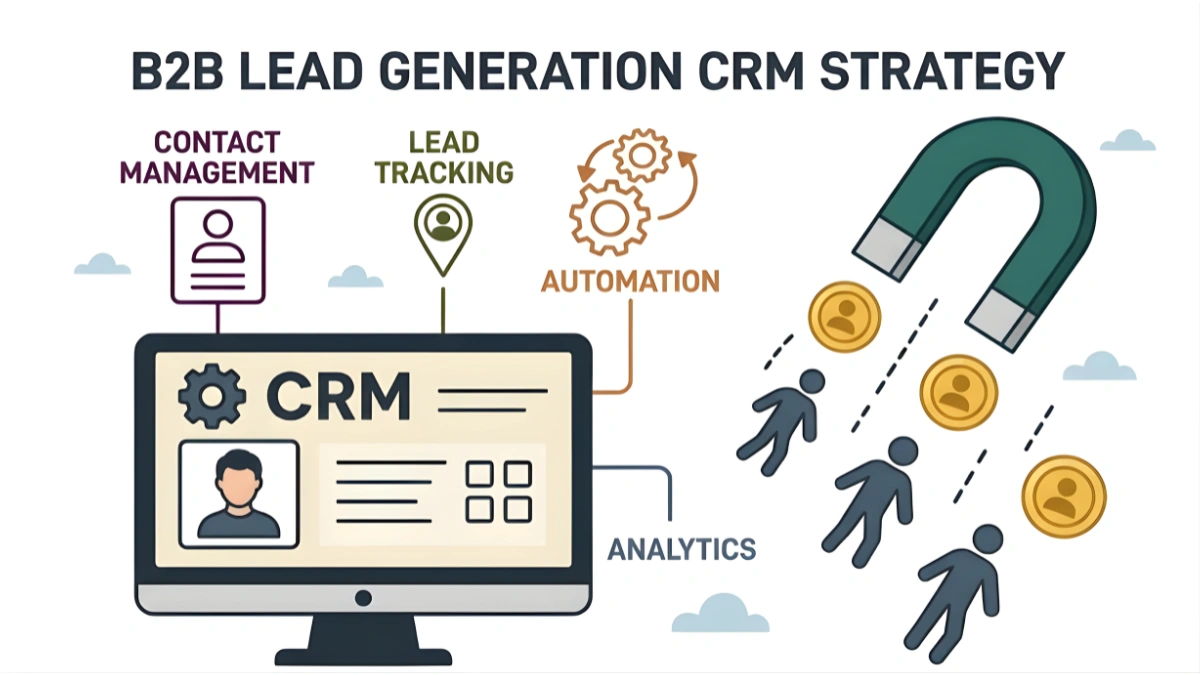
B2B lead generation has become far more complex because modern buyers interact through multiple channels before making decisions. Businesses no longer rely on spreadsheets or disconnected sales tools because lead quality, follow-up timing, and customer tracking now directly affect revenue growth. CRM software has become essential because it helps businesses organize prospect data, automate communication, and improve conversion efficiency across long sales cycles.
For companies targeting high-value B2B sales, CRM platforms now play a major role in aligning marketing and sales teams, improving pipeline visibility, and identifying which leads deserve immediate attention. The detailed framework you shared clearly shows that CRM is no longer optional in B2B lead generation because automation, scoring, and data visibility now determine which businesses convert leads efficiently
Why CRM Is Essential for B2B Lead Generation
B2B sales usually involve multiple decision makers, longer conversations, and repeated follow-ups.
CRM helps businesses manage this complexity by centralizing lead activity.
Main advantages include:
- Lead data in one place
- Communication history visibility
- Automated reminders
- Better team coordination
- Reduced lead leakage
This improves consistency across the sales funnel.
How CRM Improves Lead Quality
Not every lead deserves equal attention.
CRM systems help businesses separate high-potential prospects from low-value inquiries.
This happens through:
- Lead scoring
- Engagement tracking
- Source analysis
- Behavioral monitoring
Sales teams then focus on stronger opportunities.
Top CRM Platforms Commonly Used for B2B Lead Generation
| CRM Platform | Best For | Key Features | Pricing |
|---|---|---|---|
| HubSpot CRM | Inbound B2B lead management | Lead capture, email automation, reporting | Free / Paid tiers |
| Salesforce Sales Cloud | Enterprise B2B sales | AI scoring, analytics, automation | $25+/user |
| Zoho CRM | Affordable startup CRM | Multi-channel lead capture, scoring | $12+/user |
| Freshworks Freshsales | AI-powered sales teams | Lead scoring, email tracking | $15+/user |
How CRM Strengthens Lead Nurturing
Many B2B deals take weeks or months to close.
CRM helps businesses maintain communication through every stage.
This improves nurturing through:
- Automated email sequences
- Follow-up reminders
- Personalized communication timing
This reduces missed opportunities.
Why Sales and Marketing Alignment Improves with CRM
Without CRM, lead ownership often becomes unclear.
CRM platforms improve alignment because both teams can view:
- Lead source
- Engagement history
- Sales stage
- Campaign performance
This improves decision speed.
Pipeline Visibility Matters in B2B Sales
A strong CRM shows exactly where prospects are in the funnel.
Businesses benefit because they can quickly identify:
- Delayed deals
- Active opportunities
- Weak lead sources
This improves forecasting.
AI in Modern B2B CRM Systems
AI has become increasingly important.
Modern CRM platforms now help businesses through:
- Predictive lead scoring
- Suggested follow-ups
- Conversion forecasting
This helps sales teams prioritize better.
How Businesses Successfully Implement CRM for Lead Generation
Strong CRM implementation usually begins with:
- Defining lead sources
- Setting scoring rules
- Building clear pipelines
- Connecting marketing tools
This creates stronger long-term CRM performance.
Future CRM Trends in B2B Lead Generation
Several developments are becoming stronger.
Main trends include:
- Multi-channel lead capture
- AI qualification models
- Real-time intent tracking
- Deeper automation
These trends are shaping modern B2B selling.
FAQs
1. Which CRM is best for B2B lead generation?
HubSpot and Salesforce remain highly preferred.
2. Is CRM useful for startups?
Yes, affordable platforms like Zoho work well.
3. Does CRM improve conversion rates?
Yes, especially through lead scoring and follow-up automation.
4. Can CRM connect with LinkedIn and email tools?
Most modern platforms support this.
5. Is AI important in B2B CRM now?
Increasingly yes, especially for prioritization.
Conclusion: CRM software has become essential for B2B lead generation because lead quality, timing, and communication consistency now directly affect sales outcomes. Businesses using CRM strategically usually convert more prospects, improve sales visibility, and strengthen long-term customer acquisition.
Disclaimer: This article is for informational purposes only. CRM pricing, lead generation features, and software capabilities may change depending on vendor updates and subscription plans. Businesses should verify official product details before selecting a CRM platform.