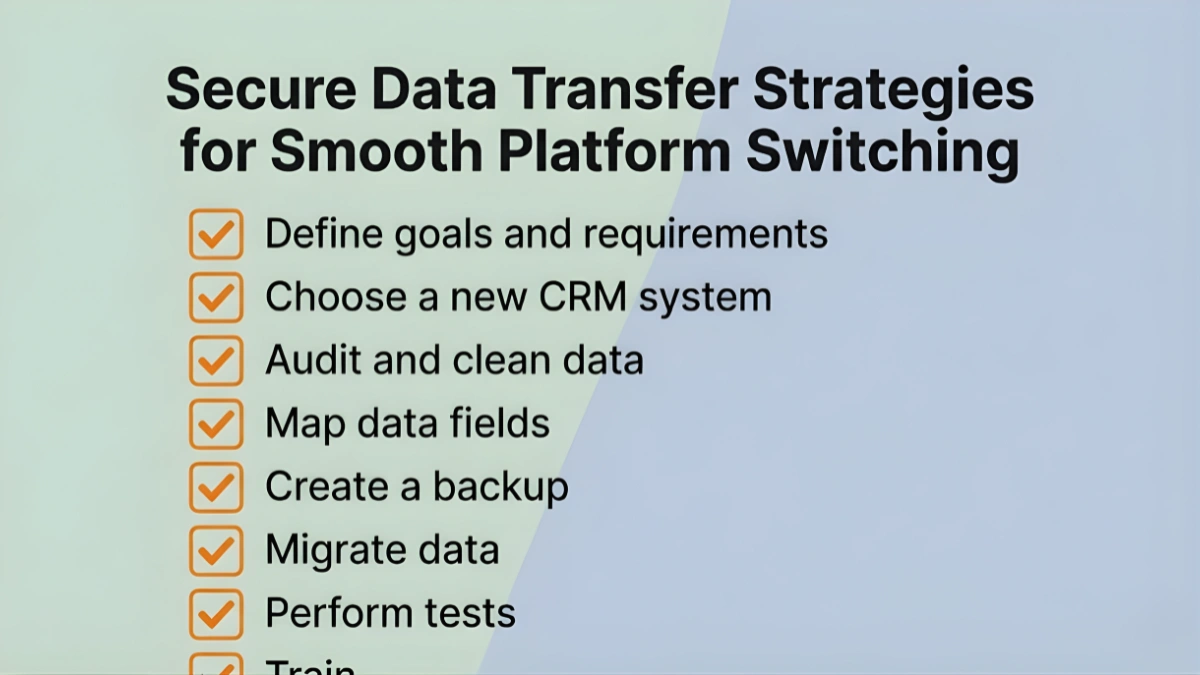
CRM migration is one of the most critical stages in business software management because customer records, sales pipelines, communication history, and automation workflows all depend on accurate data transfer. A poorly executed migration can create missing records, broken workflows, and reporting errors that directly affect business performance. With proper planning, companies can move to a new CRM without losing important customer information.
In high-value software markets, keywords related to CRM migration, data transfer tools, business software switching, and customer data management attract strong advertiser demand because companies actively search for safe migration strategies before changing platforms.
Why CRM Migration Requires Careful Planning
Moving customer data is not only about exporting files.
Main business risks include:
- Lost customer records
- Duplicate contacts
- Broken workflows
- Reporting errors
- Integration failures
This is why migration planning matters.
Pre-Migration Preparation Steps
Before moving data, businesses should first review the current system.
Important preparation includes:
- Define migration goals
- Audit active records
- Identify outdated entries
- Involve sales and IT teams
- Set migration timeline
This reduces surprises later.
How to Prepare Data Correctly
Data quality directly affects migration success.
Key actions include:
- Remove duplicate contacts
- Standardize fields
- Secure backups
- Check missing records
Clean data makes the new CRM stronger.
Best CRM Migration Tools
| Tool | Best For | Main Features | Pricing |
|---|---|---|---|
| Data2CRM | Complex migrations | Automated transfer, field mapping | From $299 |
| Trujay | Small to mid-size businesses | Backup support, tracking | Custom pricing |
| Import2 Wizard | Agencies and SaaS teams | Multi-platform migration, cleaning tools | From $99/month |
Step-by-Step CRM Migration Checklist
A structured process usually gives the best result.
Main steps include:
- Backup all CRM data
- Export in compatible format
- Clean exported records
- Map old fields to new fields
- Test with sample data
- Run full migration
- Verify records carefully
Common Migration Problems and Solutions
Several problems appear repeatedly during migration.
Common issues include:
- Field mismatch
- Missing records
- Downtime
- Integration errors
Testing early reduces these risks.
Post-Migration Verification
After migration, businesses should check all major areas.
Important checks include:
- Contacts and leads
- Opportunities
- Email templates
- Automation workflows
- Reports and dashboards
Best Practices for Safer CRM Migration
Businesses usually reduce risk by following simple rules.
Recommended actions:
- Run test migrations
- Avoid manual bulk entry
- Schedule off-peak migration
- Train users early
FAQs
1. How long does CRM migration usually take?
It depends on data volume and complexity.
2. Is backup always necessary?
Yes, backup is critical.
3. Can all CRMs transfer data easily?
Most support transfer, but tools may be needed.
4. What causes field mapping problems?
Different CRM structures often create mismatches.
5. How do teams adapt after migration?
Training improves adoption speed.
Conclusion: CRM migration becomes successful when businesses prepare clean data, use reliable tools, and verify every stage carefully. Companies that migrate properly usually avoid downtime, preserve customer records, and improve long-term CRM performance.
Disclaimer: This article is for informational purposes only. Migration tools, CRM capabilities, and pricing may change depending on provider updates and software versions. Businesses should verify official platform details before migration.