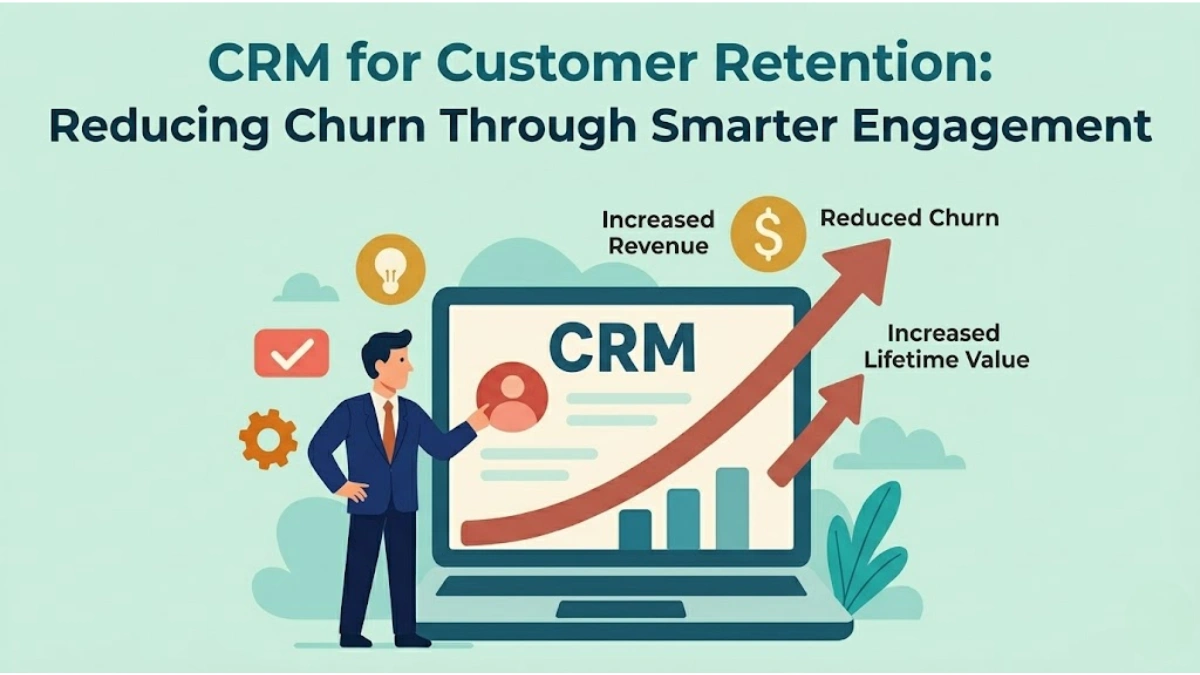
Customer churn directly affects revenue, customer acquisition costs, and long-term business stability. When customers stop using a service or product, businesses not only lose recurring income but also spend more to replace those users. CRM software helps companies reduce churn by organizing customer history, tracking engagement patterns, and allowing proactive communication before customers disengage.
In high-value SaaS and business software markets, keywords related to customer retention software, churn reduction tools, CRM engagement systems, and customer lifecycle management attract strong advertiser demand because companies actively search for practical retention strategies before investing in software solutions
Why CRM Matters for Customer Retention
A CRM platform gives businesses visibility into customer behavior before churn happens.
Main retention advantages include:
- Centralized customer records
- Service history tracking
- Engagement visibility
- Automated reminders
- Better communication timing
These improve customer stability.
Core CRM Features That Help Lower Churn
Some CRM functions directly support retention.
Important features include:
- Customer lifecycle tracking
- Automated follow-ups
- Feedback integration
- Predictive behavior analytics
- Multi-channel messaging
These help businesses react earlier.
CRM Platforms Commonly Used for Retention
| CRM Platform | Retention Features | Suitable For |
|---|---|---|
| HubSpot CRM | Segmentation, retention workflows, dashboards | SMEs and SaaS |
| Salesforce CRM | Predictive churn analysis, reporting | Enterprises |
| Zoho CRM | Surveys, follow-ups, email campaigns | Service businesses |
| Freshworks Freshsales | Activity tracking, customer insights | Startups and SMEs |
How Businesses Identify At-Risk Customers
CRM analytics often reveal churn signals early.
Common warning signs include:
- Reduced activity
- Lower response rate
- More support tickets
- Subscription delay
These indicators help teams act faster.
How Automated Retention Works
Automation improves consistency in customer contact.
Typical workflows include:
- Renewal reminders
- Personalized offers
- Re-engagement emails
Customer Segmentation Improves Retention
Not every customer requires the same retention strategy.
Segmentation helps businesses target:
- High-value customers
- Low-engagement users
- Recent inactive users
Why Feedback Matters Inside CRM
Feedback data often explains churn risk clearly.
Businesses commonly track:
- Survey responses
- Complaint patterns
- Satisfaction levels
FAQs
1. Can CRM really reduce churn?
Yes, especially with automation and tracking.
2. Which CRM suits small businesses?
HubSpot and Zoho are common choices.
3. Is predictive churn useful?
Yes, it helps act before cancellation.
4. Does automation improve retention?
Usually yes, through timely engagement.
5. Can CRM support loyalty campaigns?
Yes, many platforms include this.
Conclusion: CRM improves customer retention because it helps businesses understand behavior, automate engagement, and respond to early churn signals before revenue is lost. Companies using CRM consistently often improve customer lifetime value and long-term stability.
Disclaimer: This article is for informational purposes only. CRM features, pricing, and retention tools may change depending on provider updates and subscription plans. Businesses should verify official platform details before selecting software.