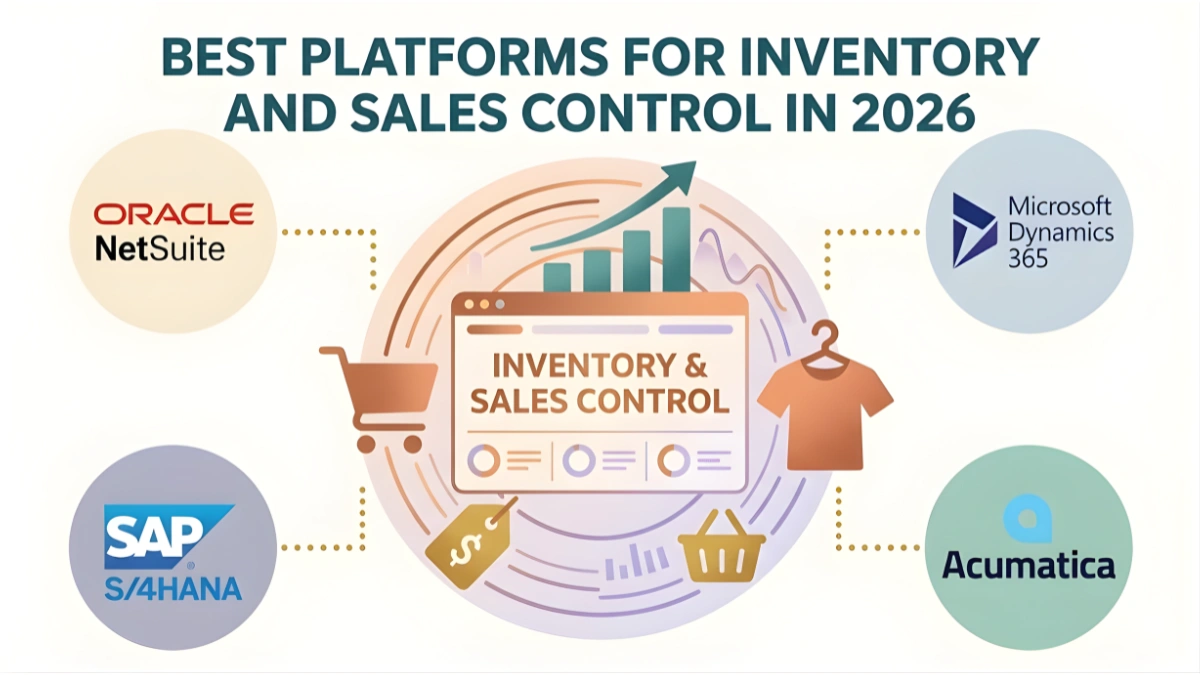
Retail businesses now depend heavily on ERP software because inventory movement, sales visibility, supplier coordination, and customer demand all require real-time operational control. Whether a retailer runs one store or multiple sales channels, manual systems often fail when order volume grows. ERP software solves this by connecting inventory, finance, purchasing, customer records, and analytics inside one platform.
In high-value business software markets, ERP-related keywords continue attracting strong advertiser demand because retailers actively compare software before investing. Retail ERP searches are especially valuable because buyers often look for systems that directly improve profitability, stock control, and business scalability. The detailed reference you shared strongly highlights how modern retail ERP selection now focuses on omnichannel operations, cloud flexibility, and analytics-driven decision making
Why Retail Businesses Need ERP Software
Retail operations involve multiple moving parts that must stay synchronized.
Main benefits include:
- Real-time stock visibility
- Faster purchase management
- Better sales tracking
- Financial control
- Omnichannel coordination
This reduces manual errors.
Top ERP Platforms for Retail Businesses in 2026
| ERP Platform | Main Strength | Best For | Pricing |
|---|---|---|---|
| Microsoft Dynamics 365 Commerce | Omnichannel retail, AI analytics | Mid to large retailers | $70+/user |
| Oracle NetSuite | Inventory visibility, financial control | Multi-channel retailers | Custom pricing |
| SAP Business One | Inventory and purchasing control | Small to mid-sized retailers | Custom pricing |
| Odoo ERP | Affordable modular retail tools | Small retailers | Free / Paid tiers |
Microsoft Dynamics for Omnichannel Retail
Microsoft Dynamics remains highly preferred for retailers managing both physical and digital sales.
Main strengths:
- Real-time inventory forecasting
- Multi-channel order handling
- Advanced analytics
This supports larger operations well.
Oracle NetSuite for Scalable Retail Growth
Oracle NetSuite performs strongly where retailers need broader financial and inventory control.
Popular advantages:
- Cloud-based flexibility
- Order synchronization
- Custom dashboards
SAP Business One for Operational Simplicity
SAP Business One remains attractive for businesses wanting structured ERP without extreme complexity.
Main features:
- Inventory automation
- Purchasing visibility
- Sales tracking
Odoo for Budget-Conscious Retailers
Odoo is often selected because smaller businesses can adopt modules gradually.
This works well for:
- Growing stores
- Lower budgets
- Custom workflows
Key Features Retailers Should Prioritize
Before choosing ERP, businesses should compare:
- Inventory automation
- Sales reporting
- Supplier management
- Mobile access
These affect long-term efficiency.
How to Choose the Right ERP
Retail ERP should match operational complexity.
Step 1: Define Main Operational Need
Usually businesses prioritize:
- Inventory control
- Sales reporting
- Multi-location visibility
Step 2: Check Existing Integrations
ERP should connect with:
- POS systems
- E-commerce tools
- Accounting software
Step 3: Review Scalability
Growth should not force software replacement too early.
Retail ERP Trends in 2026
Several trends are becoming stronger.
Main developments include:
- AI forecasting
- Cloud-first deployment
- Mobile dashboards
- Sustainability tracking
FAQs
1. Which ERP is best for retail businesses?
Microsoft Dynamics and NetSuite remain strong choices.
2. Is ERP useful for small retailers?
Yes, platforms like Odoo work well.
3. Does ERP improve inventory control?
Yes, real-time tracking reduces stock issues.
4. Is cloud ERP better for retail?
Usually yes because scaling becomes easier.
5. Can ERP integrate with e-commerce?
Most major systems support this.
Conclusion: Retail ERP software has become essential because inventory accuracy, sales speed, and operational control now directly affect retail profitability. Businesses selecting the right ERP usually improve efficiency, reduce stock errors, and support future expansion more effectively.
Disclaimer: This article is for informational purposes only. ERP pricing, software features, and integrations may change depending on provider updates and subscription plans. Businesses should verify official product details before implementation.