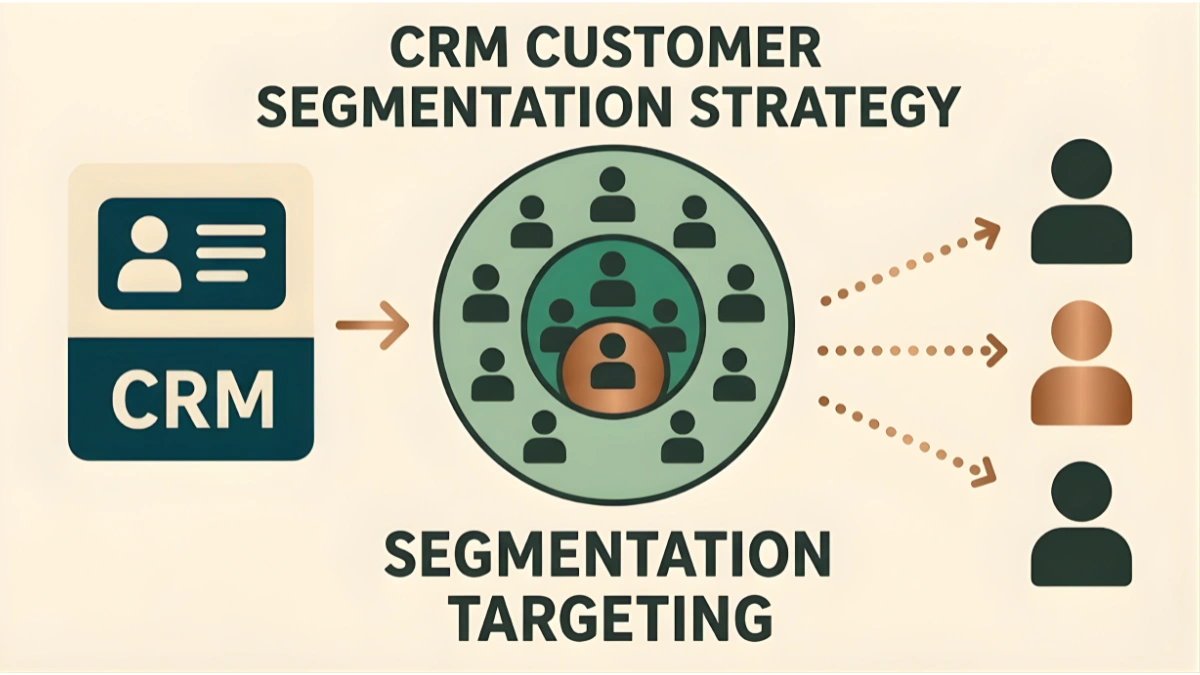
Customer segmentation has become one of the most important advantages businesses gain from CRM software because modern customer relationships now depend on personalization, behavior analysis, and smarter communication timing. Businesses that treat all customers the same often lose conversion opportunities because buyers respond better when communication reflects their interests, spending behavior, and engagement patterns.
CRM systems help businesses turn customer data into actionable groups, making it easier to deliver targeted offers, improve campaign efficiency, and strengthen long-term customer retention. The structured framework you shared clearly shows that CRM is no longer only a contact management system—it now acts as a strategic engine for customer targeting, sales intelligence, and revenue growth
Why Customer Segmentation Matters in Modern Business
Businesses collect customer data every day, but raw information alone does not improve performance.
Segmentation creates value by organizing customers into meaningful groups.
Main benefits include:
- More personalized communication
- Better campaign relevance
- Higher conversion rates
- Improved retention
- Smarter budget allocation
This helps businesses focus on the right audience.
How CRM Makes Segmentation Practical
Modern CRM systems store large amounts of customer information in one place.
This usually includes:
- Demographic details
- Purchase history
- Website activity
- Communication records
- Sales interactions
Because this data stays connected, segmentation becomes far more accurate.
Common Types of Segmentation Businesses Use
CRM platforms support multiple segmentation models depending on business goals.
The most common include:
- Demographic segmentation
- Behavioral segmentation
- Transactional segmentation
- Engagement-based segmentation
Each group helps businesses communicate differently.
Behavioral Segmentation Delivers Strong Results
Behavior often reveals more than basic profile information.
Businesses use CRM to track:
- Product interest
- Email engagement
- Repeat visits
- Purchase timing
This helps identify high-intent customers faster.
How Targeting Improves Marketing ROI
Targeting works best when campaigns match customer needs precisely.
CRM improves targeting by helping businesses:
- Send relevant offers
- Reduce wasted spend
- Increase response quality
This creates stronger marketing efficiency.
Top CRM Platforms for Segmentation and Targeting
| CRM Platform | Segmentation Strength | Targeting Tools | Pricing |
|---|---|---|---|
| HubSpot CRM | Smart lists and behavior tracking | Email workflows, lead scoring | Free / Paid tiers |
| Salesforce CRM | AI segmentation and analytics | Predictive targeting | $25+/user |
| Zoho CRM | Custom segmentation fields | Campaign automation | $14+/user |
| ActiveCampaign | Dynamic segmentation | Email and SMS targeting | $29+/month |
Why AI Is Changing CRM Targeting
Artificial intelligence now improves customer targeting significantly.
Modern CRM systems use AI for:
- Predicting purchase intent
- Identifying churn risk
- Suggesting campaign timing
This makes targeting more accurate.
CRM Helps Sales Teams Too
Segmentation is not only useful for marketing.
Sales teams also benefit because CRM helps identify:
- High-value prospects
- Repeat buyers
- Strong upsell opportunities
This improves sales efficiency.
Challenges CRM Helps Solve
Without CRM, businesses often face:
- Fragmented customer data
- Outdated records
- Weak campaign visibility
CRM solves this by centralizing customer intelligence.
How Businesses Improve Segmentation Over Time
Strong segmentation improves when businesses continuously refine data.
Important actions include:
- Updating records regularly
- Monitoring engagement
- Reviewing segment performance
This strengthens long-term targeting quality.
FAQs
1. Can CRM improve campaign ROI?
Yes, targeted communication usually improves results.
2. Which CRM is best for small businesses?
HubSpot and Zoho remain strong choices.
3. Is segmentation useful beyond marketing?
Yes, sales and support teams benefit too.
4. Does AI improve targeting quality?
Yes, predictive targeting improves precision.
5. Should customer segments change often?
Yes, dynamic updates improve accuracy.
Conclusion: CRM-based customer segmentation has become essential because businesses now compete through relevance, timing, and personalization. Companies that use segmentation well usually improve campaign efficiency, customer retention, and long-term revenue growth.
Disclaimer: This article is for informational purposes only. CRM pricing, segmentation tools, and software capabilities may change depending on vendor updates and subscription plans. Businesses should verify official product details before selecting a CRM platform.